From the Vienna BioCenter to Max Planck: Fränze Müller to lead proteomics lab in Potsdam
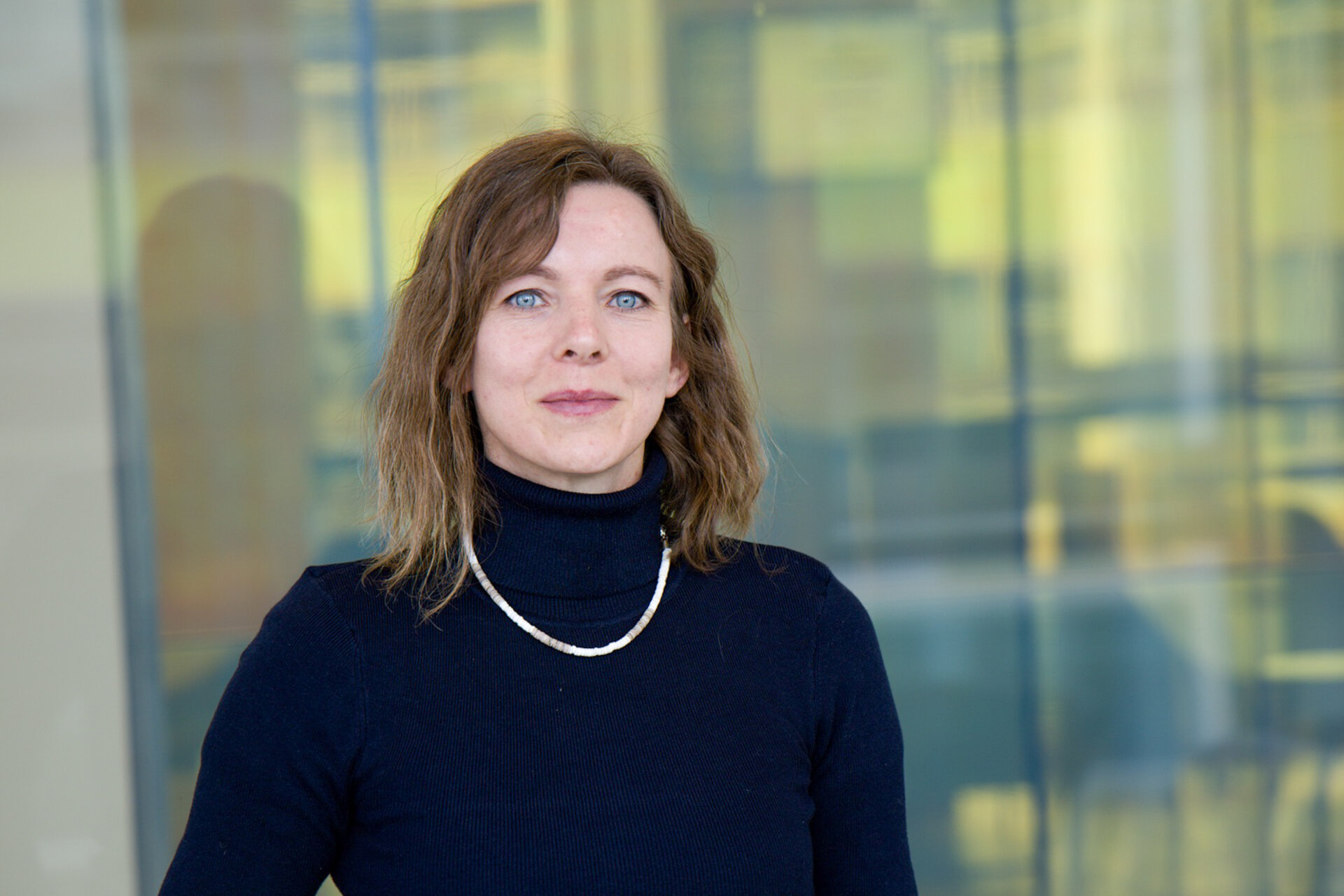
After several years at the Vienna BioCenter, proteomics researcher Fränze Müller is taking the next step in her scientific career: in July, she will start a new Proteomics Lab at the Max Planck Institute of Molecular Plant Physiology in Golm, Germany. Having contributed to method development and collaborative research at the Proteomics Tech Hub of IMP, IMBA, and GMI, Müller is now looking forward to lead an institute-wide proteomics service unit.
We spoke with her about the move, the future of proteomics, and the kind of lab culture she hopes to build.
You are about to start your own proteomics lab at the Max Planck Institute for Molecular Plant Physiology in Potsdam. What excites you most about this new chapter?
First of all, it is incredibly exciting to start my own group. But what I especially like about this position is the strong collaborative aspect. I will be responsible for proteomics support across the institute, collaborating with many different research groups. At the same time, the role also gives me the opportunity to pursue new methodological approaches and interesting new research avenues.
For me, this is the best combination I could imagine. I really enjoy collaborative science and being exposed to different biological questions, contributing methodological expertise that enables new discoveries and allows me to develop novel research ideas.
You are experienced in proteomics technology development and on questions about protein interactions and cellular organisation. How do you plan to implement this expertise in the new topic of plant research?
I will continue to work on the cell nucleus and protein complexes, which I previously studied in C. elegans at the Vienna BioCenter. Now, I will bring this experience into plant systems, combine it with advanced proteomics and structural biology approaches and use the them to support a broad range of projects across the institute. Personally, I am particularly interested in how plants interact with and adapt to their environment, be it in biotic interactions with symbionts and pathogens or coping with abiotic stress, especially in the context of climate change. Proteins are highly dynamic molecules, and plants use different protein forms and protein assemblies to react to environmental changes. Understanding these processes can help reveal how protein complexes reorganise during stress responses
During your time at the Proteomics Tech Hub, you contributed to developing cutting-edge methods. What do you think are the most exciting developments in the field of proteomics right now?
Right now, the field is moving more and more toward studying protein dynamics. It is not only about abundance anymore, but about understanding how protein assemblies change over time and how cells react to signals and environmental conditions. Mass spectrometry technologies have advanced enormously in recent years.
We now have highly sensitive tools that allow us to study signalling processes, protein modifications, and structural changes in much greater detail and with much higher throughput than before. At the same time, proteomics is becoming increasingly important in areas such as precision medicine, where researchers can now analyse patient samples at unprecedented scale and resolution.
I think this is what makes proteomics so powerful right now: we are getting closer to observing biology on the molecular scale as it happens.
The Vienna BioCenter brings together researchers from many disciplines under one roof. How has this environment shaped you as a scientist?
What I really appreciate about the Vienna BioCenter is the combination of excellent science and excellent infrastructure. Being surrounded by researchers from many different backgrounds creates an environment that is very stimulating.
I also benefited enormously from the core facilities and the openness of the community. Even outside my own expertise, I was always able to approach people, learn new techniques, and get training. For example, I worked with microscopy methods despite having no formal background in this field, simply because people were willing to share their expertise.
Beyond the scientific side, I also benefited a lot from the career development opportunities at the Vienna BioCenter, including leadership courses, communication workshops, chalk talk sessions, and presentation training. These experiences really helped prepare me for the next step in my career.
You are now building your own team up from the ground. What kind of lab culture do you hope to create?
I am a strong believer in open communication and flat hierarchies. I want to create an environment where people feel comfortable discussing ideas openly and where mistakes are seen as part of the learning process rather than something to hide.
Science can only work well when people feel supported and empowered. That is very important to me.
At the moment, I am especially looking for a technician who is interested in molecular biology, analytical chemistry and bioinformatics, because computational skills are becoming increasingly essential in proteomics research. I would like to especially encourage applicants with a Bachelor degree or education as technical assistant to apply.
Looking ahead, what are you most excited about in the years to come?
I am really looking forward to building new collaborations and becoming part of the scientific community in Potsdam. The institute is located within the Potsdam Science Park, which brings together researchers from many different disciplines and institutions.
In many ways, it reminds me of a specialized version of the Vienna BioCenter, but with a similarly collaborative and interdisciplinary atmosphere. I am really excited to continue growing scientifically in such an environment while building my own team and research program.
Fränze is hiring, check out the open position here.
About the Vienna BioCenter Proteomics Tech Hub
The Proteomics Tech Hub, headed by Karl Mechtler and shared between three institutes at the Vienna BioCenter (IMBA, IMP and GMI), aims to advance cutting-edge proteomics methods with a strong focus on single-cell proteomics. The team establishes and designs novel protocols to improve the sensitivity of protein identification, protein quantification, and cross-linking technology.