FWF grants for Moritz Gaidt and Joris Van der Veeken
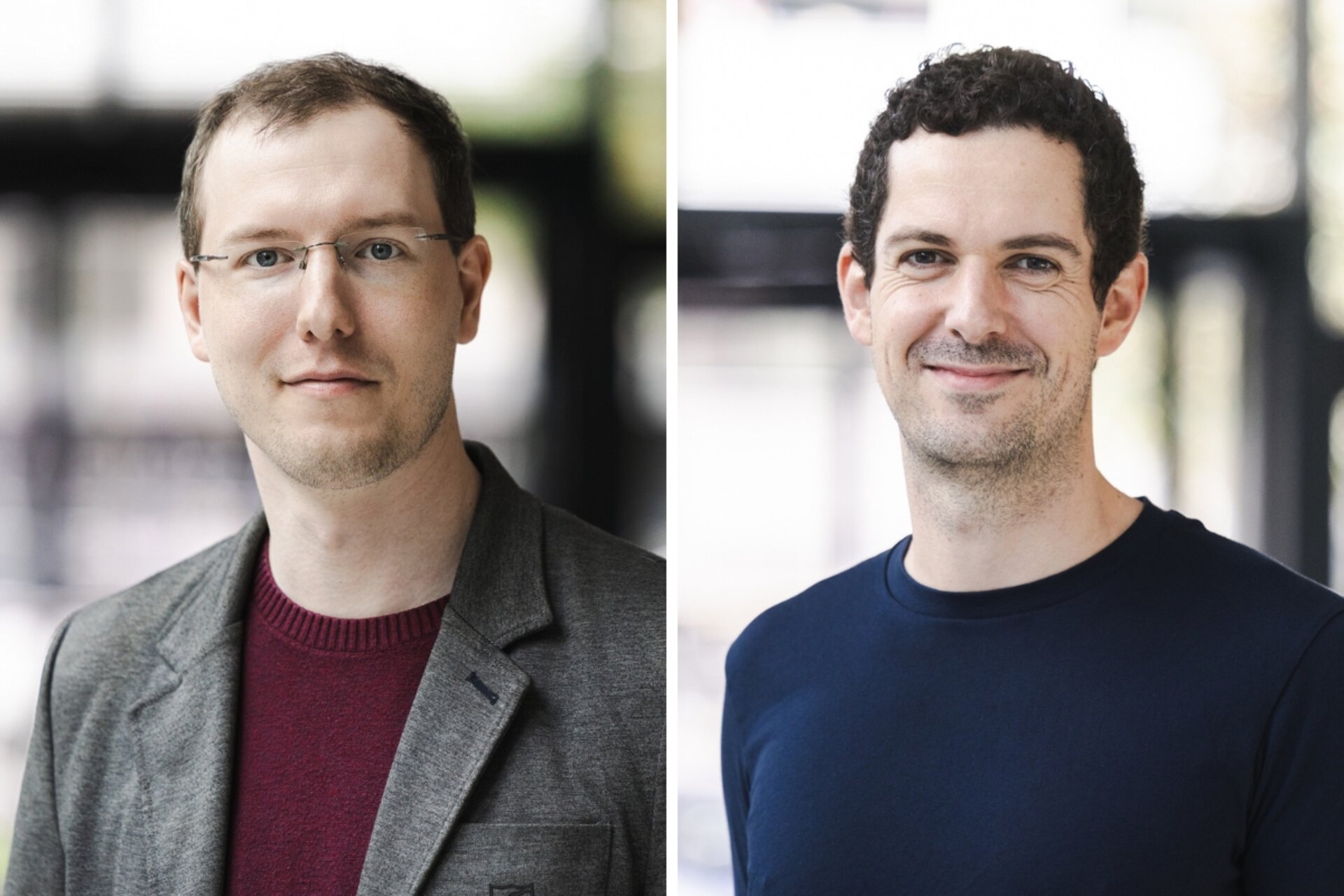
The Austrian Science Fund (FWF) has awarded Stand-Alone grants to two IMP group leaders, Joris van der Veeken and Moritz Gaidt. Their projects will receive multi-year support to investigate how gene regulation shapes immune cell identity, function, and survival. A third grant will support a project involving Manuel Matzinger of the Proteomics Technology Hub.
The FWF Stand-Alone program supports outstanding basic research across all scientific disciplines through highly competitive international peer review. With their newly awarded grants, Moritz Gaidt and Joris van der Veeken have secured FWF funding for two ambitious projects that tackle fundamental questions of how genes are switched on and off in immune cells, and how failures in these processes can lead to inflammation, immune disorders, and disease.
How nuclear receptor RORγt guides immune cell behaviour
Joris van der Veeken will study how the protein RORγt controls the behaviour of different types of immune cells. RORγt plays a central role in many vital processes: it helps immune cells develop in the thymus, supports the formation of lymphoid tissues, protects the body against bacteria and fungi, and contributes to immune tolerance toward harmless microbes in the gut. At the same time, RORγt is also involved in chronic inflammatory diseases such as inflammatory bowel disease and arthritis. Because it is active in so many different cells, drugs that block RORγt often cause serious side effects.
To better understand how RORγt can perform such diverse roles, van der Veeken’s team has developed a special mouse model in which the RORγt protein can be switched off within hours. This makes it possible to observe the immediate, direct effects of RORγt on gene activity before secondary changes appear. By combining this approach with single-cell analysis and genetic screening, the team aims to reveal how RORγt works together with other regulatory factors to control immune cell functions in a highly cell type-specific way. In the long run, these insights could help pave the way for safer, more targeted treatments for inflammatory diseases.
Chromatin repression as a safeguard of immune cell survival
Moritz Gaidt’s project explores the role of a little-understood chromatin regulator called MORC3, a protein that helps control which genes are switched on and off in immune cells. Although MORC3 is found in many cell types, Gaidt’s team made the surprising discovery that only certain immune cells critically depend on it to survive. Why these specific cells need MORC3, while others do not, is one of the key questions the project will address.
The researchers suspect that MORC3 acts as a protective brake that prevents these immune cells from accidentally activating self-destruct programs. When MORC3 is lost, harmful gene activity may be switched on, causing the cells to die. To test this idea, the team will identify which genes are normally kept in check by MORC3 and which molecular switches are responsible for turning them on when MORC3 is gone.
To do this, the team will use specially engineered mouse models that allow them to study the immediate effects of MORC3 loss. Together, these tools will help pinpoint how MORC3’s gene-repressing activity protects immune cells and ensures their survival.
Manuel Matzinger participating in third project
In addition, the project “3D Models & Single-Cell Tools for Placental Angiogenesis”, led by Sandra Haider at the Medical University of Vienna, also received FWF funding. Manuel Matzinger of the Proteomics Technology Hub is a co-beneficiary of this project, contributing his expertise in cutting-edge single-cell proteomics. Together, the project consortium will drive the development and analysis of advanced 3D placental models on a multiomic-level, helping to identify key signalling pathways and cell–cell interactions that shape early placental development.
About the FWF
The Austrian Science Fund (FWF) is Austria's central funding organization for basic research. Stand-alone grants are allocated to fund individual research in the area of non-profit oriented basic research. They are assigned solely based on their high quality, assessed by international referees on a competitive basis. The current approval rate for stand-alone projects is 26.6 percent.
Further reading
Gaidt lab